
Table of Contents
The sample qualification decision for burner nozzle bodies
Burner nozzle bodies need sample qualification that accounts for a nozzle passage and attachment feature exposed to process heat. The component may face oxidizing gases, thermal cycling and deposits; those conditions shape what must be defined before a purchase order can describe an acceptable part. This guide concentrates on the evidence and decisions needed for this specific stage. The intended result is a signed approval package defining what was actually validated.
A sample approval should explain which design, process, tool revision and supplied condition it covers. Dimensional conformity is one part of that approval. The buyer may also need material, performance, assembly and production-control evidence. Define those requirements before samples are made so that the trial can produce representative information.
What makes burner nozzle bodies a distinct casting requirement
The defining geometry is a nozzle passage and attachment feature exposed to process heat. Pay particular attention to orifice geometry and attachment alignment; these are the interfaces that can turn an apparently acceptable raw casting into an assembly problem. Review the load-bearing sections and the tool-access envelope together, because an improvement to one can make another harder to control.
The service review should address oxidizing gases, thermal cycling and deposits. Ask the equipment designer to identify the credible failure modes and the conditions used to validate them. The manufacturing priority is the specified material condition and passage cleanliness. Avoid selecting a heat-resistant alloy from room-temperature strength alone. That mistake can remain hidden in a nominal model and emerge only during a production trial or field installation.

A practical workflow for sample qualification
Agree the sample quantity and selection method, document the full process route and inspect all specified characteristics. Separate laboratory, dimensional and assembly results. Record deviations openly and identify whether approval is unconditional, limited to a trial or contingent on a corrective action. Preserve approved reference samples where they have a clear purpose.
Apply the workflow to burner nozzle bodies by recording a nozzle passage and attachment feature exposed to process heat as the component-specific feature under review. Assign the dimensional work to orifice geometry and attachment alignment and connect the release evidence to the specified material condition and passage cleanliness. Keep proposed changes visible until the responsible engineer approves them. The review should end with a signed approval package defining what was actually validated, rather than an unexplained statement that the drawing is acceptable.
Worked review scenario for burner nozzle bodies
A hand-selected sample fits the assembly, but its production records do not represent the intended batch route. The sample demonstrates that one part can fit; it does not establish production stability. Request representative evidence and identify the remaining validation work before authorizing an unrestricted repeat order.
For this component, put the decision at a nozzle passage and attachment feature exposed to process heat. The buyer should ask how the proposed route maintains orifice geometry and attachment alignment under the agreed delivered condition. The supplier should explain the evidence available for the specified material condition and passage cleanliness. If those two answers use different datums, revisions or material conditions, close the discrepancy before accepting the sample. This is a review example, not a claim about an actual Daji customer project.
Plan a representative production trial
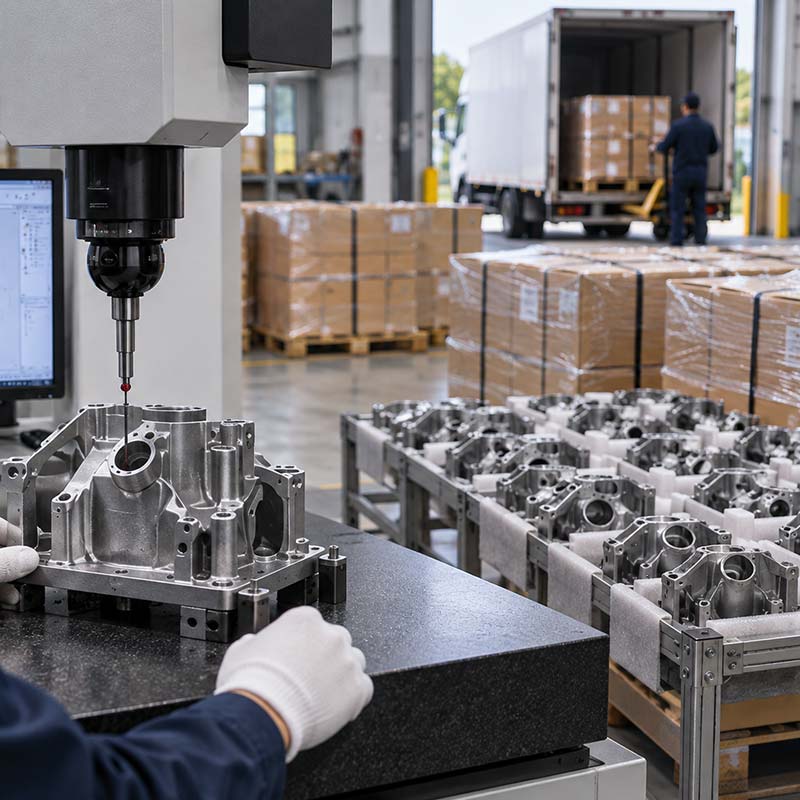
A trial for Burner nozzle bodies should use the intended tooling, material condition, finishing route and inspection setup. Record any selective adjustment or special handling needed to make samples acceptable. Decide whether that step belongs in the normal process or indicates an unresolved development issue. The trial should examine the specified material condition and passage cleanliness and demonstrate that orifice geometry and attachment alignment can be produced with the proposed route. Agree how many samples and process conditions are needed to answer the actual risk question. One passing part is evidence of feasibility, while repeatability requires broader evidence.
Check the mating assembly
Inspecting Burner nozzle bodies in isolation can miss an installation problem. Review the mating parts, assembly sequence, fastener access and the effects of oxidizing gases, thermal cycling and deposits. Determine whether the assembly requires a gap, a contact patch, a preload or a specific alignment. Check that the chosen dimensional controls actually establish those conditions. Where a trial fit is useful, agree the mating-part revision and the permitted adjustments. A successful fit achieved by modifying the mating component should be recorded as a design decision rather than treated as evidence that the original drawing was satisfied.
Review changes across all operations
A change made to improve casting can alter machining access, inspection access or installed fit. For Burner nozzle bodies, assess a nozzle passage and attachment feature exposed to process heat whenever a die insert, gating arrangement, material condition or fixture is revised. Document which characteristics require revalidation and which records need updating. Include subcontracted finishing in the change process. The supplier should know when notification is sufficient and when written technical approval is required. Keep the decision connected to a revision identifier so that old samples and new production cannot be mistaken for the same approved configuration.
Treat cleaning as a specified operation
Define the cleanliness needed for Burner nozzle bodies by its assembly and service requirements. Internal passages, blind holes and intersecting features can retain debris after machining or finishing. Agree access for cleaning and the method used to verify the result. Protect cleaned components during drying, storage and packing. Avoid transferring a generic cleanliness target from another product without checking its meaning. For a component exposed to oxidizing gases, thermal cycling and deposits, remaining contamination may affect seals, lubrication, assembly torque or corrosion behavior in ways that a cosmetic exterior check will not reveal.
Keep development and production economics separate
Tooling and trial costs for Burner nozzle bodies should be assessed over a realistic volume range. Record the ownership and maintenance terms of the die, the cost of a future revision and the assumptions behind quantity pricing. Low initial volume can favor a different development route from a stable repeat program. Compare alternatives on total accepted-component cost and required evidence. Avoid claiming a fixed break-even quantity without a project quotation. The economic decision should reflect orifice geometry and attachment alignment, inspection scope, material utilization and the customer’s actual demand uncertainty.
Decision checklist before release
The release package for burner nozzle bodies should identify the drawing revision, the specified material and condition, the controlled geometry and the agreed acceptance methods. It should make a signed approval package defining what was actually validated easy to retrieve. Record any deviation with its location, reason and authorized disposition. Keep an unresolved performance question separate from a passed dimensional result.
Before committing to production, verify that orifice geometry and attachment alignment has an agreed reference system, that the specified material condition and passage cleanliness has usable acceptance criteria and that the component is evaluated against oxidizing gases, thermal cycling and deposits. If a requirement is still unclear, identify who can resolve it and which manufacturing operation must wait for that decision.
Comparison of purchasing decisions
| Decision | Incomplete approach | Useful acceptance evidence |
|---|---|---|
| Component definition | Price a generic casting | a nozzle passage and attachment feature exposed to process heat |
| Functional fit | Check isolated sizes | orifice geometry and attachment alignment |
| Quality release | Collect unspecified test certificates | the specified material condition and passage cleanliness |
| This review stage | Accept an informal supplier assurance | a signed approval package defining what was actually validated |
Discuss your casting drawing with Daji
For burner nozzle bodies, send Daji your controlled drawing, 3D model, material requirements, order quantity and the questions identified during sample qualification. Review the relevant new energy & power castings application and Daji’s drawing-based OEM service. Where final interfaces need machining, include the requirements for CNC machining and finished-part delivery. Ask the engineering team to confirm feasibility and quotation scope against your actual specification.
For broader guidance on defining a steel casting order, see the Steel Founders’ Society of America purchasing guidance. Use the applicable drawing and agreed product specification to establish this component’s acceptance criteria.
Frequently Asked Questions
What information is needed for burner nozzle bodies sample qualification?
Provide a controlled drawing and model, the intended service conditions, material and delivery condition, quantities and the required acceptance records. The specific output for this stage is a signed approval package defining what was actually validated. Identify open questions before tooling or the operation they affect begins.
Which geometry matters most for burner nozzle bodies?
Review a nozzle passage and attachment feature exposed to process heat. The functional machining priority is orifice geometry and attachment alignment. Tie those features to the installed reference system and confirm that the inspection setup reproduces the agreed drawing interpretation.
How should the material for burner nozzle bodies be specified?
Use an approved cast-material specification, grade and delivery condition suitable for oxidizing gases, thermal cycling and deposits. Agree the required composition and mechanical-property evidence. A similar wrought designation or a single hardness reading does not establish automatic equivalence.
What evidence should accompany burner nozzle bodies samples?
Include the drawing revision, process route, material and thermal-batch identity, dimensional results and the examinations defined in the order. Give particular attention to the specified material condition and passage cleanliness. Separate sample conformity from any remaining equipment-level validation.
Can Daji review burner nozzle bodies before a production order?
Daji’s published OEM workflow includes drawing review, tooling development, casting, heat treatment, machining and inspection coordination. Submit the actual component requirements so the engineering team can confirm the proposed scope. Specific tolerances, tests, lead times and material alternatives need project confirmation.