
目次
The drawing review decision for automotive steering knuckles
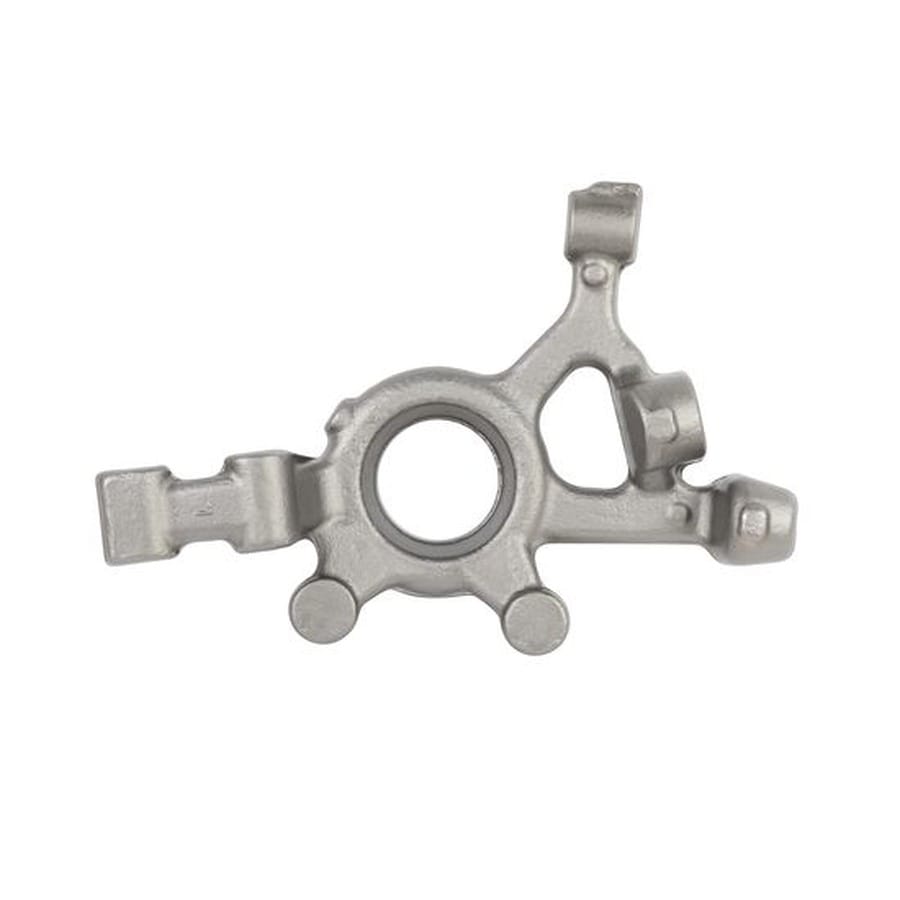
Automotive steering knuckles need drawing review that accounts for intersecting wheel, steering and suspension interfaces. The component may face road shock, repeated steering loads and fatigue; those conditions shape what must be defined before a purchase order can describe an acceptable part. This guide concentrates on the evidence and decisions needed for this specific stage. The intended result is an annotated drawing and a closed technical question log.
エンジニアリングレビューは、コンポーネントがアセンブリにどのように適合し、機能するかから始める必要があります。完全に見えるモデルは、サプライヤーに材料状態、許容可能な表面の不連続性、または穴のパターンに使用される基準についての推測を残すことができます。工具に影響を与える要件と、加工中に調整できる要件を分離します。金型が解放される前に前者を凍結します。.
What makes automotive steering knuckles a distinct casting requirement
The defining geometry is intersecting wheel, steering and suspension interfaces. Pay particular attention to bearing seat and suspension-interface location; these are the interfaces that can turn an apparently acceptable raw casting into an assembly problem. Review the load-bearing sections and the tool-access envelope together, because an improvement to one can make another harder to control.
The service review should address road shock, repeated steering loads and fatigue. Ask the equipment designer to identify the credible failure modes and the conditions used to validate them. The manufacturing priority is customer-defined special characteristics and approved safety-part examinations. Avoid replacing vehicle-level validation with a dimensional inspection report. That mistake can remain hidden in a nominal model and emerge only during a production trial or field installation.
描画レビューのための実用的なワークフロー
モデルリビジョンと図面リビジョンを比較してから、すべての機能インターフェイスをマークします。どの寸法が鋳造に耐えなければならず、どれが後で確立されるかを尋ねます。所有者と共有された質問ログの競合を解決し、承認された回答。変更によりインターフェイスが移動する場合は、嵌合コンポーネントを特定し、その設計所有者の同意を取得します。.
Apply the workflow to automotive steering knuckles by recording intersecting wheel, steering and suspension interfaces as the component-specific feature under review. Assign the dimensional work to bearing seat and suspension-interface location and connect the release evidence to customer-defined special characteristics and approved safety-part examinations. Keep proposed changes visible until the responsible engineer approves them. The review should end with an annotated drawing and a closed technical question log, rather than an unexplained statement that the drawing is acceptable.
Worked review scenario for automotive steering knuckles
サプライヤーは、給餌を改善するために遷移半径を増やすことを提案しています 有用な応答は、インストールされているクリアランスとロードパスを確認し、改訂されたモデルを文書化し、嵌合アセンブリが影響を受けるかどうかを制御図面を改訂せずに電子メールで提案を受け入れると、部品の2 つの定義が残ります。.
For this component, put the decision at intersecting wheel, steering and suspension interfaces. The buyer should ask how the proposed route maintains bearing seat and suspension-interface location under the agreed delivered condition. The supplier should explain the evidence available for customer-defined special characteristics and approved safety-part examinations. If those two answers use different datums, revisions or material conditions, close the discrepancy before accepting the sample. This is a review example, not a claim about an actual Daji customer project.
便利な技術質問ログを設定します
A question log for Automotive steering knuckles should contain the drawing location, the uncertainty, the proposed answer, the decision owner and the revision that implements the answer. Prioritize issues affecting tooling, material selection, bearing seat and suspension-interface location and customer-defined special characteristics and approved safety-part examinations. Avoid closing a technical question merely because the commercial order has been placed. Resolve open requirements before the operation they control begins. A brief controlled log provides a clearer basis for supplier comparison and later corrective action than a long email chain containing partially accepted alternatives.
Agree how receiving discrepancies are handled
Before shipment, define how the buyer reports a concern with Automotive steering knuckles. The report should identify the lot, quantity, drawing revision, observed condition and method of checking. Preserve representative parts and packaging when transport damage is plausible. Agree containment boundaries so that an isolated concern does not lead to uncontrolled mixing of assessed and unassessed stock. Supplier and buyer should compare their evidence for customer-defined special characteristics and approved safety-part examinations and decide on disposition through the agreed quality process. A rapid response is useful only if it remains traceable and technically grounded.
アセンブリ参照システムを制御します
Use the installed locating surfaces to define the reference system for Automotive steering knuckles. The machining priority is bearing seat and suspension-interface location. State how the part is supported, how clamp forces are applied and which surfaces remain free. A fixture that forces a flexible component into a convenient shape can generate reassuring measurements that disappear after release. Compare the inspection setup with the real assembly and document any difference. Where a rough casting needs temporary locating features, show how those features transfer the part into the final functional datum system.
検査のアクセシビリティを早期に評価します
Review whether the selected examinations can reach the regions important to customer-defined special characteristics and approved safety-part examinations. Deep pockets, overlapping ribs, narrow passages and closed features can restrict both measurement and non-destructive examination. Discuss these limitations while geometry can still change. Alternative access, different examination timing or a redesigned feature may be appropriate, but each option needs a technical assessment. For Automotive steering knuckles, avoid treating an inaccessible region as automatically acceptable because the exterior looks clean. The agreed inspection plan should state relevant limitations and the evidence used to address them.
レコードを配信ロットに接続します
Material identity, thermal history and inspection evidence must remain associated with Automotive steering knuckles through the full manufacturing route. Define what a heat, thermal batch and shipment lot mean for the order. Confirm how markings survive trimming, machining and finishing, and what alternative identification is used when direct marking would damage a functional area. Test the traceability chain on a sample delivery: select a container, identify its parts and retrieve the relevant records. A certificate with the supplier name but no usable lot reference cannot support that exercise.
リリース前の決定チェックリスト
The release package for automotive steering knuckles should identify the drawing revision, the specified material and condition, the controlled geometry and the agreed acceptance methods. It should make an annotated drawing and a closed technical question log easy to retrieve. Record any deviation with its location, reason and authorized disposition. Keep an unresolved performance question separate from a passed dimensional result.
Before committing to production, verify that bearing seat and suspension-interface location has an agreed reference system, that customer-defined special characteristics and approved safety-part examinations has usable acceptance criteria and that the component is evaluated against road shock, repeated steering loads and fatigue. If a requirement is still unclear, identify who can resolve it and which manufacturing operation must wait for that decision.
購入決定の比較
| 決定 | 不完全なアプローチ | 有用な受け入れ証拠 |
|---|---|---|
| コンポーネントの定義 | 一般的な鋳造品の価格を設定します | intersecting wheel, steering and suspension interfaces |
| 機能的フィット | 隔離されたサイズを確認します | bearing seat and suspension-interface location |
| 品質 リリース | 不特定のテスト証明書を収集します | customer-defined special characteristics and approved safety-part examinations |
| この レビュー 段階 | 非公式のサプライヤー保証を受け入れます | 注釈付きの図面とクローズドな技術質問ログ |
ダジとあなたのキャスティングの描画について話し合ってください
For automotive steering knuckles, send Daji your controlled drawing, 3D model, material requirements, order quantity and the questions identified during drawing review. Review the relevant 自動車用鋳物 アプリケーションとダジの 図面ベースのOEMサービス. 。最終的なインターフェイスが機械加工を必要とする場合は、次の要件を含めます CNC加工と完成品納品. 。エンジニアリングチームに依頼して、実際の仕様に対する実現可能性と見積もりの範囲を確認してください。.
鋼鋳造順序の定義に関する広範なガイダンスについては、を参照してください Steel Founders’ Society of America 購買 ガイダンス. 。このコンポーネントの受け入れ基準を確立するには、該当する図面と合意された製品仕様を使用してください。.
よくある質問frequently Ask
What information is needed for automotive steering knuckles drawing review?
制御された図面とモデル、意図されたサービス条件、材料と納品条件、数量、および必要な受け入れ記録を提供します この段階の具体的な出力は、注釈付きの図面と閉じた技術的な質問ログです ツーリングまたはそれらが影響する操作が開始される前に、未解決の質問を特定します。.
Which geometry matters most for automotive steering knuckles?
Review intersecting wheel, steering and suspension interfaces. The functional machining priority is bearing seat and suspension-interface location. Tie those features to the installed reference system and confirm that the inspection setup reproduces the agreed drawing interpretation.
How should the material for automotive steering knuckles be specified?
Use an approved cast-material specification, grade and delivery condition suitable for road shock, repeated steering loads and fatigue. Agree the required composition and mechanical-property evidence. A similar wrought designation or a single hardness reading does not establish automatic equivalence.
What evidence should accompany automotive steering knuckles samples?
Include the drawing revision, process route, material and thermal-batch identity, dimensional results and the examinations defined in the order. Give particular attention to customer-defined special characteristics and approved safety-part examinations. Separate sample conformity from any remaining equipment-level validation.
Can Daji review automotive steering knuckles before a production order?
Dajiが公開しているOEMワークフローには、図面レビュー、工具開発、鋳造、熱処理、機械加工、検査の調整が含まれます。エンジニアリングチームが提案された範囲を確認できるように、実際のコンポーネント要件を提出します。特定の公差、テスト、リードタイム、および材料の代替にはプロジェクトの確認が必要です。.